#brain
We Might Finally Understand How We Inherit Anxiety From Our Parents

Researchers have discovered an inherited brain pathway that increases the risk of anxiety in monkeys, and if the research translates to humans, it could have huge implications for treating overwhelming anxiety.
The focus was specifically on extreme anxiety temperaments (AT) because these are a significant risk factor for anxiety disorders and depression in human children.
"The way we measure this alteration in monkeys is very similar to the method that we use to measure this circuit in our studies of anxiety in human children, so this research is highly translational,'' said senior author and biological psychiatrist, Ned Kalin.
Extreme early-life anxiety is one of the biggest risk factors for anxiety disorders and depression, yet most current treatments address symptoms rather than the underlying problem.
"We are continuing to discover the brain circuits that underlie human anxiety, especially the alterations in circuit function that underlie the early childhood risk to develop anxiety and depressive disorders,'' said Kalin. Source
Journal Reference:
Andrew S. Fox, Jonathan A. Oler, Rasmus M. Birn, Alexander J. Shackman, Andrew L. Alexander and Ned H. KalinJournal of Neuroscience 30 July 2018, 0102-18; DOI: 10.1523/JNEUROSCI.0102-18.2018
'Antifreeze' molecules may stop and reverse damage from brain injuries
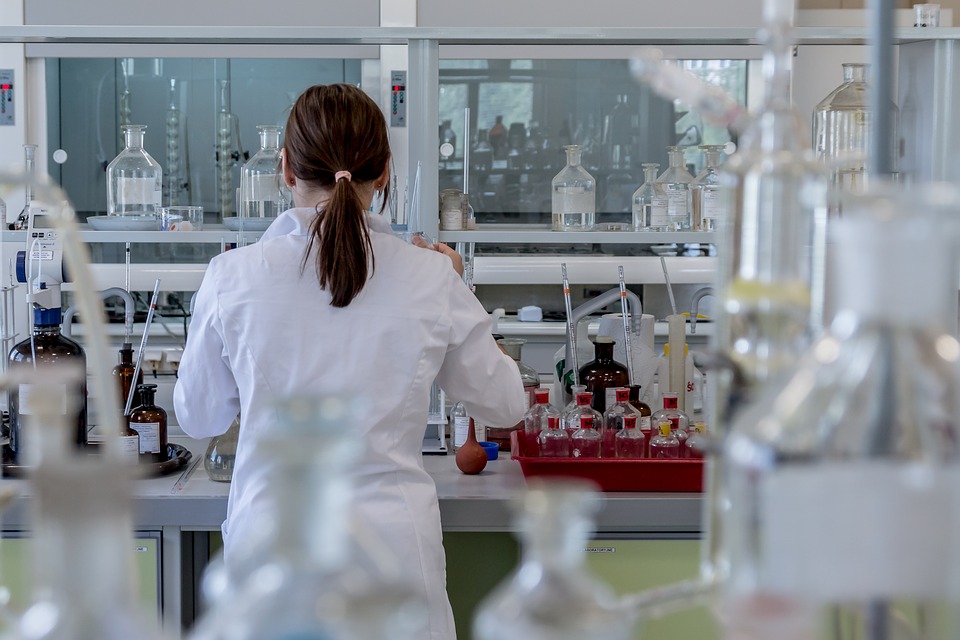
The key to better treatments for brain injuries and disease may lie in the molecules charged with preventing the clumping of specific proteins associated with cognitive decline and other neurological problems, researchers from the Perelman School of Medicine at the University of Pennsylvania report in a new study published in Neurobiology of Disease.
Concentrations of these brain molecules -- called N-acetylaspartate (NAA) -- are known to decrease when people suffer from brain injuries and diseases. Its possible NAA is creating "peptide backbones," the authors said -- the NAA inserts itself between layers of amyloid-beta clumps and protofibrils, preventing the formation of mature amyloid fibrils.
"We show a new and potentially significant biological function of NAA in the brain, as a surprisingly effective agent for inhibiting and even reversing aggregation of amyloid-beta," said lead author Jean-Pierre Dolle?, PhD, of the Penn Center for Brain Injury and Repair. Source.
Jean-Pierre Dollé, Jeffrey M. Rodgers, Kevin D. Browne, Thomas Troxler, Feng Gai, Douglas H. Smith. Newfound effect of N -acetylaspartate in preventing and reversing aggregation of amyloid-beta in vitro. Neurobiology of Disease, 2018; 117: 161 DOI: 10.1016/j.nbd.2018.05.023
New tools developed for brain mapping; should boost research into depression, dementia
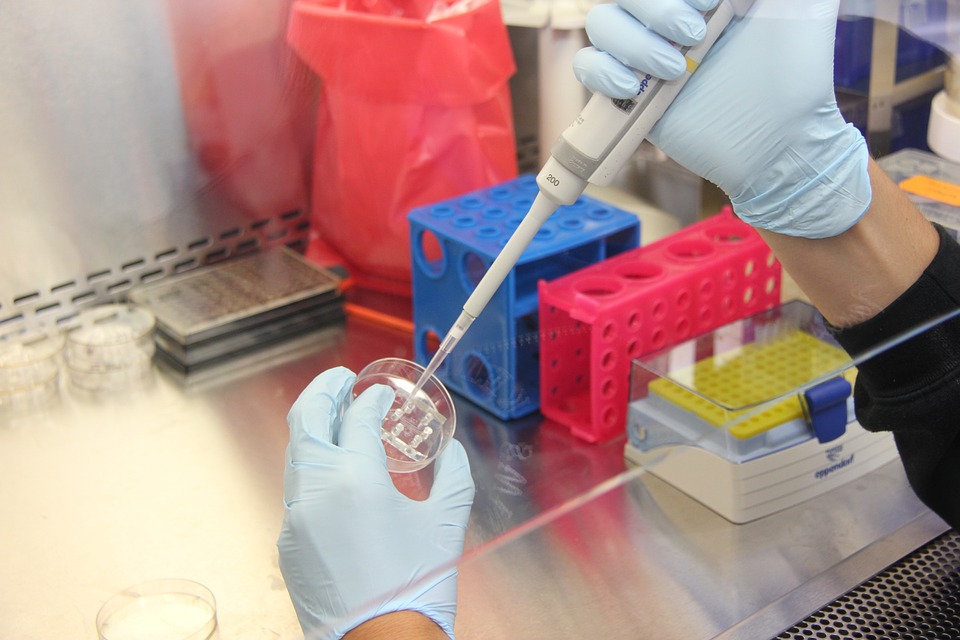
Researchers at Florida Institute of Technology have developed the fastest method to date for creating a key molecule used by neuroscientists at Columbia University in mapping brain activity.
Neuroscientists are working to decode the brain to understand neurological disorders including depression and dementia, in part by studying "glutamatergic receptors," where Glu is the molecule of interest.
To aid neuroscientists in mapping the enormously complex brain circuitry, researchers have used light to activate inactive, or "caged," neurotransmitters in live brain tissue, including glutamate. Source
More Information: Charitha Guruge et al. Improved Synthesis of Caged Glutamate and Caging Each Functional Group, ACS Chemical Neuroscience (2018). DOI: 10.1021/acschemneuro.8b00152
A Shield for Your Brain: New Enzyme Protects Against Neurodegeneration
 Photo: Thomas Quine / flickr / cc by
- “NMNAT2” refers to nicotinamide mononucleotide adenylyl transferase 2, a neuronal protective factor.
- New Study realized that NMNAT 2 shows positive correlation to cognitive function, and negative correlation with degenerative factor.
- This is indicative of huge potential for persons with neurodegenerative diseases such as, but not limited to:
- Alzheimer’s disease
- Dementia
- Parkinson’s disease
- Huntington’s disease
- Proteinopathies is a condition caused by aggregates of proteins, whereby proteins misfold, causing clumps in the brain.
- NMNAT2 is categorized as a “chaperone” enzyme, allowing for the influx of nicotinamide dinucleotide (NAD), strengthening neuronal bodies.
- The chaperone capability of NMNAT2 reduces protein stress caused during proteinoapathies, while the enzymatic abilities provides a protection against excitotoxicity, a process by which neurons are damaged.
- Read more, at PLOS Biology.
Electrifying Your Brain: Increasing Recovery Potential from Paralysis Causing Strokes
- New Startup - Halo Neuroscience produced a sport headphone to aid in stimulating muscles through electrifying the brain.
- “tDCS” refers to transcranial direct current stimulation, a delivery system used in stimulating and enhancing neuronal connections, ultimately exciting muscle response.
- Halo Neuroscience, created the headphones primarily for increasing workout performances in elite athletes.
- Electrodes attached to the head bands of the device sends electric pulses to the brain through the scalp, stimulating neuronal activity
- During research performed by Halo Neuroscience, it is found that administration of electric pulses to the brain shows significant enhancement of fine motor skills in adults.
- This device could show immense potential for persons with damaged CNS function, including but not limited to patients of paralysis, caused by advents of stroke.
- Find out more, at HaloNeuro.
- Read about the research.
- Watch the demonstration.