#alzheimer-disease
Related
Hot Leaf Juice: One-step Closer to Treating Down Syndrome

Photo: Panafotkas / flickr / cc by-sa
- “DS” refers to down syndrome
- DS is a genetic disorder characterized by distinctive facial features, and intellectual disability.
- New research found that consuming green tea, leads to an improvement in mental abilities of persons with DS.
- “EGCG” refers to epigallocatechin- 3 gallate, a compound found in green tea.
- ECGC is found to increase, in persons with DS, cognitive functions such as:
- Memory training
- Executive functions
- Language abilities
- Attention capabilities
- The study was done over a period of 12 months, consisting of adults with DS, using a double blind, placebo-controlled, single centre trial. (TESDAD)
- Results of study showed that cognitive functions of persons treated with EGCG has better performances than those with placebos.
- This is indicative of the benefits and functionality of EGCG.
- The potential of this finding includes neurological disabilities including but not limited to:
- Alzheimer’s disease
- Read more, at The Lancet.
Posted 10 years ago
0
A Shield for Your Brain: New Enzyme Protects Against Neurodegeneration
 Photo: Thomas Quine / flickr / cc by
- “NMNAT2” refers to nicotinamide mononucleotide adenylyl transferase 2, a neuronal protective factor.
- New Study realized that NMNAT 2 shows positive correlation to cognitive function, and negative correlation with degenerative factor.
- This is indicative of huge potential for persons with neurodegenerative diseases such as, but not limited to:
- Alzheimer’s disease
- Dementia
- Parkinson’s disease
- Huntington’s disease
- Proteinopathies is a condition caused by aggregates of proteins, whereby proteins misfold, causing clumps in the brain.
- NMNAT2 is categorized as a “chaperone” enzyme, allowing for the influx of nicotinamide dinucleotide (NAD), strengthening neuronal bodies.
- The chaperone capability of NMNAT2 reduces protein stress caused during proteinoapathies, while the enzymatic abilities provides a protection against excitotoxicity, a process by which neurons are damaged.
- Read more, at PLOS Biology.
Posted 10 years ago
0
Metal in the Head? Alzheimer’s Causes Studied
 Photo: Ann Larie Valentine / flickr / cc by-sa
- “AD” refers to Alzheimer’s disease.
- AD is a neurodegenerative disorder, common with the aging person.
- New research reveals novel way of understanding iron abundance within the grey matter of the brain, and the prevalence of AD.
- Iron deposit is a measure of iron homeostasis, or equilibrium which is evidence of inflammation responses to neurodegeneration.
- LA-ICP-MS refers to laser ablation- inductively coupled plasma-mass spectrometry imaging, a highly sensitive method used to break apart and analyze metals.
- Researchers, through the use of LA-ICP-MS were able to analyze iron and phosphorous deposit in the gray matter between a live, and a deceased brain
- The study found a positive correlation between iron deposits and myelin integrity loss, indicative of neuronal cell-breakdown.
- Read more, at NeuroImage.
Posted 10 years ago
0
Mapping the Anatomy of Alzheimer’s Disease
 Photo: Joe Stump / flickr/ cc- by
- “AD” refers to Alzheimer’s disease.
- AD is a neurodegenerative disorder causing decreased function in memory, thinking and old age.
- AD is commonly characterized through hippocampal atrophy, or degeneration of brain tissue in the hippocampal region.
- Recent study has identified new anatomical markers for AD, such as cotical thickness, and grey matter density.
- Cortical thickness refers to the overall thickness of the cortex, or brain. Grey matter is the general component of the central nervous system.
- Using Magnetic Resonance Imaging, (MRI), scientists were able to identify more key markers to characterize AD.
- These 6 markers include:
- Cortical thickness
- Cortical area
- Cortical curvature
- Grey matter density
- Subcortical volumes
- Hippocampal shape
- These markers allow for an enhanced classification and distinction of AD diagnosis.
- Find out more, in Human Brain Mapping.
Posted 10 years ago
0
Could Neuronal Ageing be Reversed?

Photo: Garry Knight /Flickr/ cc by
- “NR” means Nicotinamide riboside.
- “NAD +” means nicotinamide adenine dinucleotide, a derivative of niacin (Vitamin B3).
- NR, a precursor of NAD +, is integral to cellular respiration.
- “MuSC” means modulated muscle stem cells
- Mitochondria is the power generator of a cell.
- Comparing mitochondrial function between aged mice-stem cells indicate that replenishing NR presence in cells improves MuSC in aged mice.
- NR decreases muscle senescence through regulation of mitochondrial activity.
- Regulation of cellular neural aging and melanocyte stem cells via NR shows increased lifespan in aged mice.
- Cellular neural aging reversal could mean potential for advancing technology and studies combatting age related diseases such as Alzheimer’s, Parkinson’s and Dementia.
- Find out more, at AAAS Science.
Posted 10 years ago
0
Real Time Observation of Neurodegenerative Diseases
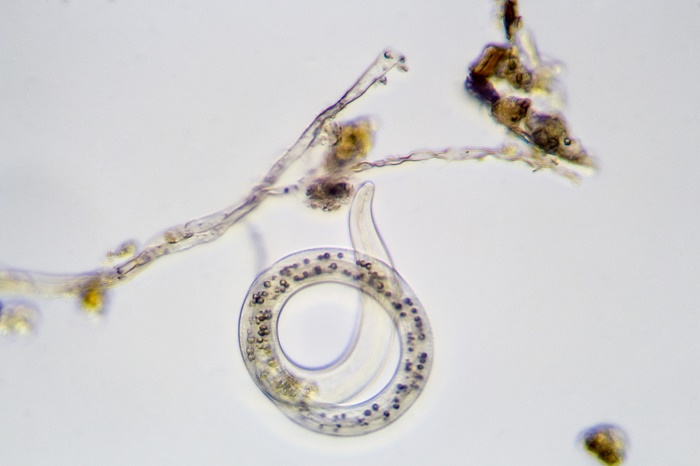
Photo: Specious Reasons / flickr / cc by-nc
- C. elegans stands for 'Caenorhabditis Elegans'
- A roundworm, commonly used in research
- Researchers developed device to isolate C. elegans
- Housing 32 individual compartments, the device is 2cm by 2cm
- Significance of this research tool is it enables:
- Observing protein cluster formation, associated with:
- Amyotrophic Lateral Sclerosis
- A progressive and fatal neurodegenerative disease
- Alzheimer's disease
- A progressive, degenerative disorder
- Parkinson's disease
- A chronic and progressive movement disorder
- Other neurodegenerative diseases
- Amyotrophic Lateral Sclerosis
- Testing the effects of certain drugs
- Roundworm, immobilization using a temp-sensitive solution
- Observing protein cluster formation, associated with:
- Published in the journal Molecular Neurodegeneration
Posted 10 years ago
0