The Audacious Aspie takes a well deserved break!
We have talked a lot about stress, But not a lot on how to deal with it, which is what I will tackle in this post. You could say, I will STRESS on how to lose stress (humour being one of them, perhaps the most important one, I’ve heard that if you don’t laugh, you’ll cry). Just what are the ways to peace of mind? There are many, perhaps more than you think. I would say “more than you or I think”, but since I’ll probably be doing some research on this, I’ll go on an ego trip and pretend I know everything. Perhaps this has been an ego trip all along, and I’ve only been fooling myself into thinking I know all the stuff I’ve babbled on about, and thus fooled you guys into thinking I know what I am talking about!
That is one deep rabbit hole, but let's get back on topic: The Audacious Aspie takes a well deserved break!. You’ve heard this one before, it gets tossed around a lot, probably even a big reason on why there has been big health craze in the last couple of years. And a lot of people participate in it, some for the health benefits, others for the photo-op benefits. Physical exercise. But just how important is it, really, to staying calm really? More than you’d think. From personal experience, it has helped me alot. I always find that after doing something like going to the gym, walking (morning and night time) and even playing sports like Soccer or airsoft, it has helped me tremendously to stay calm, improve my confidence and has helped me alot with other issues as will, like high anxiety and social anxiety.
But what about the scientific facts? What do they say? The ADAA (Anxiety And Depression Association of America) claims that physical exercise might be recommended most often by healthcare professionals to combat stress and depression. The ADAA claims that “exercise is also considered vital for maintaining mental fitness” (as stated here), claiming that studies have shown it to also be “super effective!” (to use a pokemon pun) against fatigue, increasing alertness and concentration plus improving our cognitive function over all. Really helpful if our energy and ability to concentrate has been compromised. Basically, we become version 2.0 of ourselves.
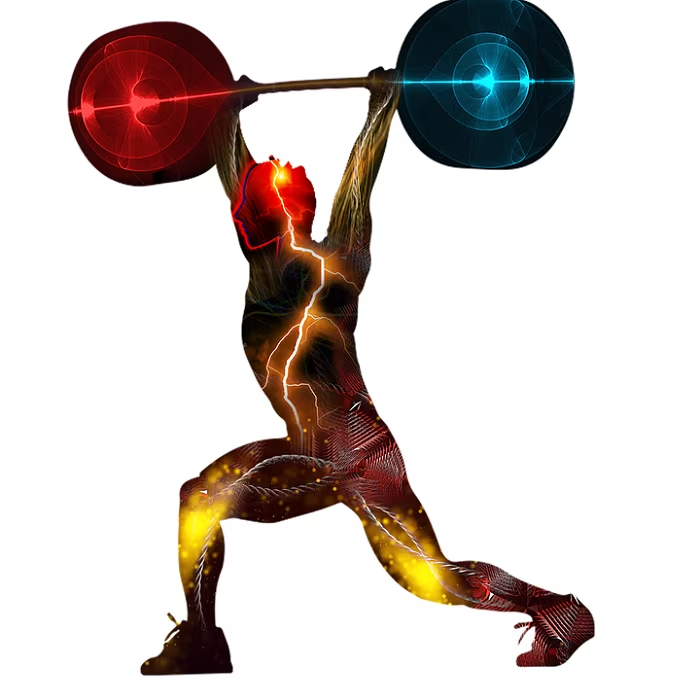
What's better is that physical exercise releases endorphins, brain chemicals that “act as natural painkillers” (Page one, Paragraph 5). Endorphins also improves our sleeping capabilities, further reducing stress. Do you have to work out like you're competing in the olympics, WWE wrestling match, International weightlifting competition or some other high-octane, bone shattering, rivers-of-sweat inducing event? Not at all (though, not gonna lie, it would be pretty rad. Except for the bone-shattering bit, or the rivers-of-sweat bit. Ew). I have been taught to pace myself, to push myself only to the point where I can do it without grunting loudly every rep like I’m trying to clear out my colon. It works.
And never, ever underestimate the power of deep breathing, something we could all do more of. Control your breathing, then you control your reactions to life. I was going to say control your life, but let's be honest: no one can control every aspect of their lives, part of the beauty of it. But what about stuff like meditation, or acupuncture, do they work? Is alternative medicine a thing or a hoax? Can’t I just take pills? One question at a time folks one at a time! Where are we, at a Sean Spicer press conference? Do I have to treat you like children? I will turn this car around!
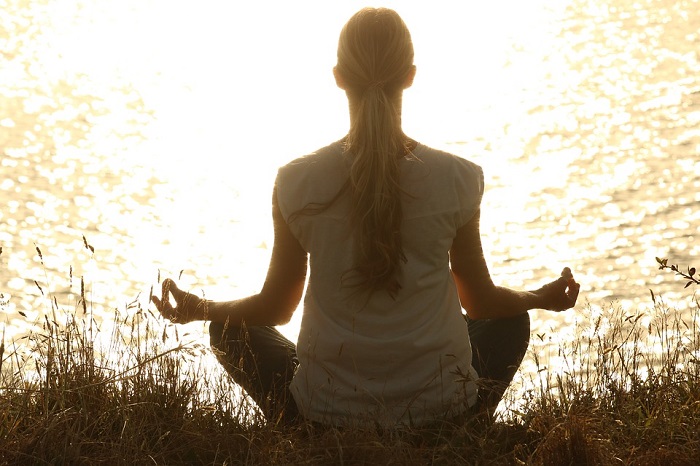
Anyways, a study was done on undergraduate students regarding whether meditation does reduce stress and helps them be more forgiving. The numbers here are based in America, but the end result could still here in Canada, or even anywhere where in the world. Stress, particularly undergrad stress, is like an underground criminal business in that it hopes across many international borders. Except this won't cost billions, nore will it build a wall and isolate people from one another (a hint for Trump). They had two groups used in the research: an intervention group doing daily meditation and another group practicing integrated meditation/mindful states of mind with daily activities. After just 5 weeks, participants were observed to be more calm then whne they first started (PDF found here)

As for the largest group, a mix body of graduates and undergraduates, “reductions in psychological distress and anxiety” (Page Three, Paragraph Two) were observed after just six weeks! A peer-led intervention was held, with reductions in heart rate and state anxiety notably reduced. Not sure what state anxiety is, but I’m willing some conspiracists could answer that. Meditation man, meditation.
Result? It was a success. They have shown to reduce stress in adults and are popular regardless of what culture you come from. As for the undergraduates, not only has it reduced their stress but also encourages forgiveness. The paper notes that research should be done on “the mechanisms, sustainability, and generalizability of such effects” (Page Ten, Paragraph Two). As wil as how such programs can “most appropriately and effectively be made available to students” (Page Eleven, Paragraph Two)
But what about alternative medicine as a whole? In 2011, a Veteran Affairs Department did a study on alternative medicine and what it did for those suffering PTSD, answering two main questions, is alternative medicine more effective than: “control for PTSD symptoms and health-related quality of life?” (Page Five, Paragraph Two) and if there is evidece from other studies that support it?.
Concerning meditation, it was a mixed bag, there were design limitations which hampered understanding the findings of this group. But there is a light at the end of the tunnel, they found that the subjects have recorded improvement (page 28, paragraph 2, http://relaxing.ambient-mixer.com/celtic-relax). For Acupuncture, it was roughly the same. Those who have had acupuncture showed more improvement than those who did not, lasting for at least three months afterwards. Who knew sticking needles into your body, what probably sounds like something from a horror movie, might really be good for you after all? Maybe the killer just wants you to relax.

In short, there was found to be limited support for alternative medicine helping those suffering PTSD, but each study was plagued with design with problems, hampering the “interpretability of study findings” (Page Thirty-Two, Paragraph Three). The end result? Meditation might not be as helpful as it’s proclaimers say. Acupuncture, will, there is something worth investing in as it helps a lot. As for relaxation, will, “an important clinical benefit for active comparators versus relaxation treatment was possible” (Page Thirty-Two, Paragraph Three) In other words, it tries.
“Can't I just take pills to deal with the stress?” I was taught by my parents to use both regular medicine (pills, injections and such) and alternative medicine, as both can complement the other. Never, to rely on just one. The way I was taught was this: pills (medical science) and healing rocks/stress balls (alternative medicine), or anything else that is temporary and will constantly need to be replaced, are like crutches that you lean on for support, but then put away when you don’t need them. Like if you are travelling short distances, from your chair to your bed or couch, or short actions like from working on a computer to quickly putting something together, you do not need your crutches.
You do need them, however, for the long journeys, like walking to work or if your task requires you to be on your feet all day (I’d talk to the manager about this, thats workplace harassment!). But after weeks, than months, than years of using them, it becomes second nature to have them. Yes, you will still need them, but it is no longer a case of “can’t start my day without them, won’t survive!” to “oh yea, just need to do these really quick things, then I can get my crutches”. You learn to survive without them, even if it’s not entirely.
You no longer need to make sure you have them, checking your pockets or trying to remember if you took them or not (unless you didn't, then you will know), wondering if you will survive without them. Even if you did forget them, you will know that you can survive without them for the day, but make a note to grab them tomorrow. Your day is not hugely affected by their loss.
In short, you learn to be more and more independent from them. To need them less and less. But enough inspirational speeches, let's get to the really fun and important bits: research! Yaaaaaay!! Or, we would, if I could actually find a source online about it (not even, of all places on Google. Google, you have officially let. Me. Down.) So my inspirational speech, complete with your own opinion, will have to do.
But, of course, nothing can beat stress like owning a pet! Someone who loves you unconditionally, licks you all over, looks at you with big sad eyes, greets you at the door, constantly wants attention from you, makes a mess around the inside of the house, incessant barking whenever the wind blows, knocks things over while looking straight you, scratche’s up the furniture...will, we love them anyways.
They help make our days a little brighter and provide a shoulder to cry and lean on. My pets offer are a great source of comfort to me and my family, you could even call them therapy dogs. Keeping us grounded when all we want to do is fly off the handle bars each and every day. Don't tell anyone, but also hope to get another cat one day. I know, we are a shame to both dog and cat lovers everywhere, but we figure that you can never have just one type of pet (even if we don’t admit it).
BBBuuutttt (if Google will coperate), it’s time for facts!! Yaaaay! According to a site called vetSTREET.com, the power pets have over our stress is so intense, that making physical contact with your pet, the way we normally assume to relieve stress with pets, is not even needed. Nope, all you have to do to start relieving stress with your pet is just to look at them. Yes, that's right, not touch or smell them, just look. Say’s the post “Watching a fish in an aquarium has the same effect.”(Page One, Paragraph Three)
Now if you are caught bored and/or just staring off into space, and you happen to be looking at your pet, you can just say “I’m just relieving some stress” and they will believe it. Maybe.
Another thing they found out was that pets can “decrease our reactions to stressful situations” (Page One, Paragraph Four), which is espicially helpful when you are in exam periods, like me during the time of this writing! Why am I not using such time to work on my exam instead? Just because. I wonder though, if you do a combination of the two, stare relentlessly at your pet while petting them, do you reap double the benefits? Also, if the cat stares at you before knocking something over, is he/she calming her/himself down before making a break for it right after pushing it over the edge?
You know, getting into the zone? I’d ask once you caught him/her and before you killed them. Speaking of running around, the site claims that, on average, people with pets get more exercise than those without! Particularly dog owners, which is just another reason for dog owners to feel superior I bet. Why (do pet owners get more exercise, not why dog owners are/feel superior)? We often take our dogs for longer walks, especially if they are big and chubby because of their condition I call “living rug syndrome”. It’s when your dog refuses to get up for any and all reasons, ESPECIALLY when you are stepping over them with something heavy in your hands.
Dr. Beck, the man the site is interviewing, claims that “your feeling of responsibility toward your dog is often more motivating” (Page One, Paragraph Five), even more motivating the going to the gym. Dr.Beck also believes that cats can help get you exercise to, like bending down to do their bidding and fitch that toy under the couch. Or running around the house trying to get them after knocking a thing over. Both work..
And that is just three of the ways us pet owners can feel superior to everyone else...I mean how pets can greatly improve our lives.
These are just some of the many ways we can sit back and relax after a hard day's work, or just a hard day in general. To really experience the stress-relieving power for yourselves, you can read the entire articles for yourselves, sitting, for hours on end. Not moving. Staring at your screen. Thinking “the horror, the horror”. Until next time, this has been, and continues to be, the Audacious Aspie.